

Serving Downtown • the Mesa • Goleta • Isla Vista • Montecito.
House Mice Santa Barbara, CA — Kitchens, Garages and Walls
Hear scratching at night? We find how the mice are getting in, trap them, and seal the gaps so they stay out. Free consultation.
Santa Barbara rodent control
House mice in Santa Barbara: the short version
House mice are the small gray mice that live in our kitchens, garages and wall gaps. A house mouse weighs about half an ounce, and it can squeeze through a gap just ¼ inch tall. That is about the width of a pencil.
If you have house mice in Santa Barbara, three things fix it: traps to remove the mice, metal and concrete to seal the gaps, and a clean-up of droppings and nests. Food removal alone will not make them leave.

Santa Barbara rodent control
Is it a house mouse? A quick ID check
Santa Barbara also has deer mice, which are a different animal with a different health risk. Check these clues first.
| Clue | House mouse | Deer mouse | Young rat |
|---|---|---|---|
| Coat | Gray to light brown all over | Brown back, white belly with a clear line between | Brown or gray, bigger body |
| Tail | Almost no fur | Furry, two-toned | Scaly, thick |
| Eyes | Small | Larger, looks "bug-eyed" | Small |
| Size | 5–7 inches with tail | Similar, a bit bigger | Feet and head look large for the body |
| Where | Kitchens, garages, wall gaps | Sheds, cabins, hillside edges | Attics, yards, crawl spaces |
Not sure? Send us a photo. If it has a white belly and a furry tail, read our Deer Mice and Hantavirus page. For larger droppings and gnaw marks, see Roof Rats and Norway Rats.
Why it happens
Why Santa Barbara homes get house mice
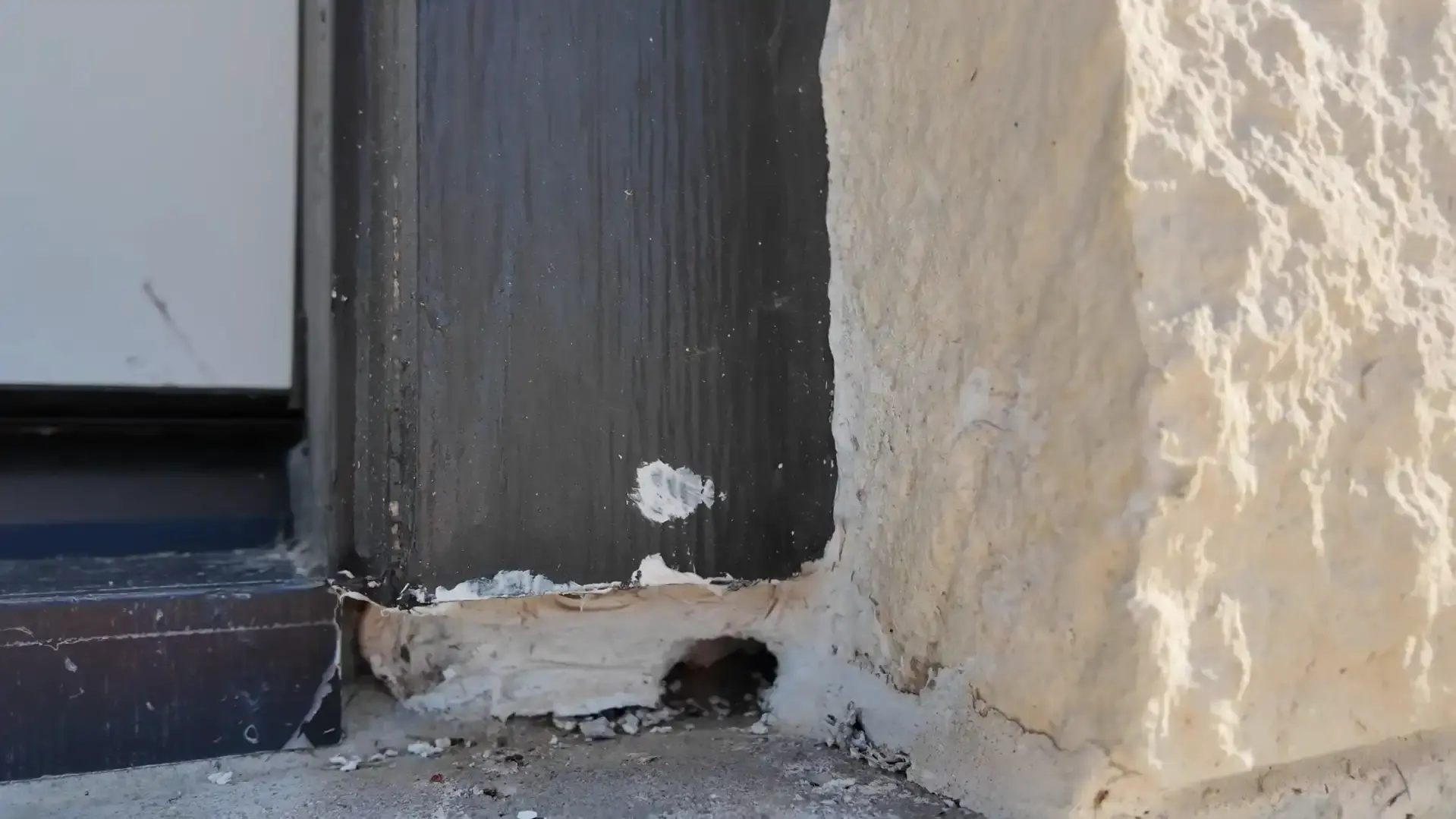
Mice do not need a big hole or a dirty house. They need food, a warm spot and a gap. Santa Barbara gives them all three.
Mild weather
Mice stay active all year, and the first fall rains push more of them indoors. Santa Barbara's mild climate means there is no cold season that slows them down.
Stored boxes and pantry food
Garages with cardboard, pet food and bird seed are easy homes. Mice nest in cardboard and eat from open bags, so storage areas are often where they settle first.
Older homes and add-ons
Gaps form around pipes, dryer vents, garage doors and old foundation vents. A mouse needs only about a quarter inch to get in.
Rentals and dense housing
Shared walls and shared trash areas, common in Isla Vista and downtown apartments, let mice move from unit to unit.
UC experts say house mice rarely go more than about 30 feet from their nest and food. So if you see one in the kitchen, the nest is usually close, often inside a wall, cabinet base or stack of boxes.
What to look for
Signs of house mice in your home
Mice are quiet and easy to miss. These are the signs that tell you they are already inside.
Droppings
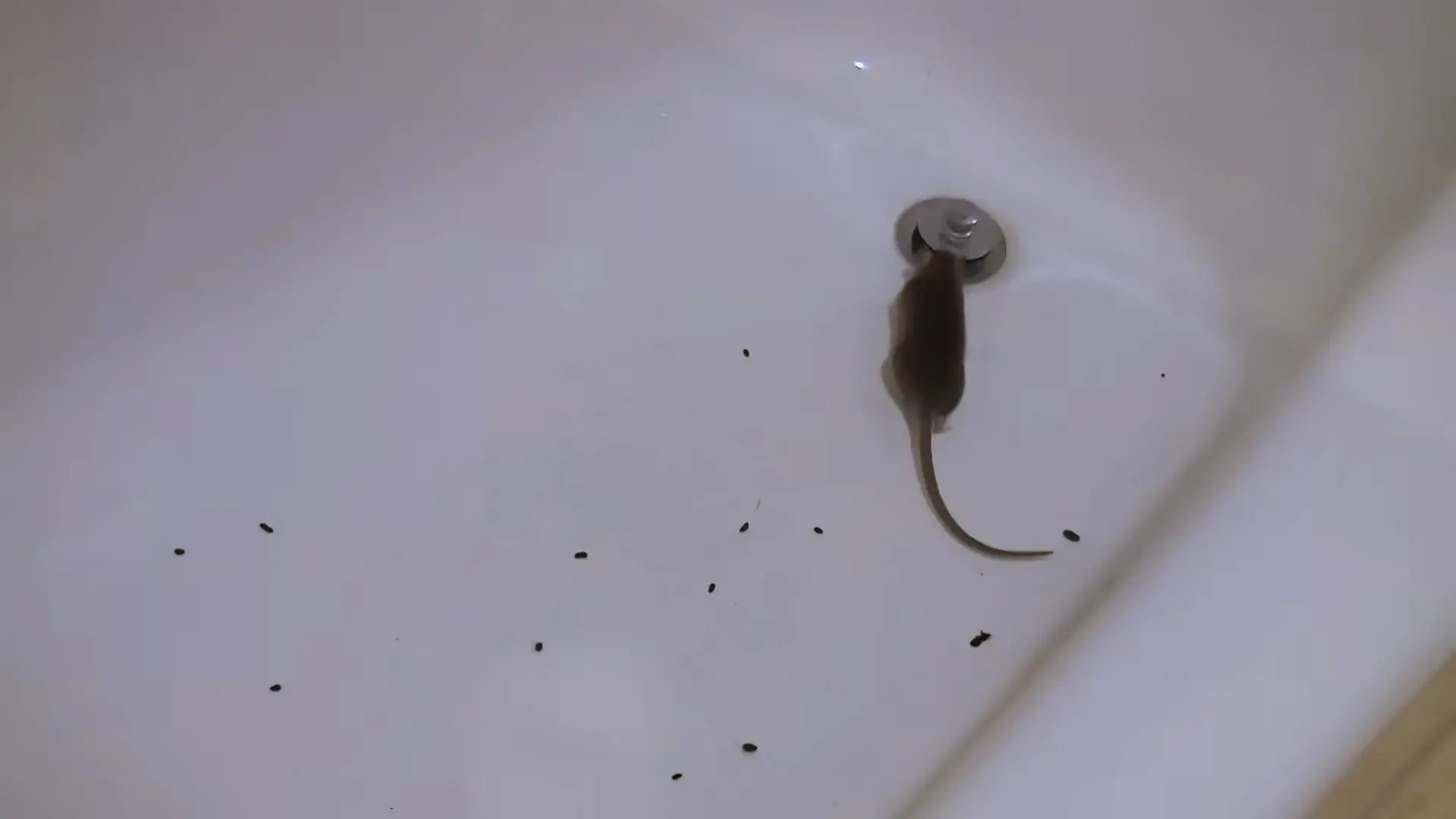
Droppings along walls, in drawers and behind appliances are the most common sign. They are dark and about the size of a grain of rice.
Gnaw marks
Gnaw marks on food boxes, soap, wires or wood show where mice are feeding and traveling.
Shredded paper or fabric
Nests of shredded paper or fabric in quiet, dark spots such as drawers, boxes and behind appliances.
A musky, stale smell
A musky, stale smell is stronger in long-running problems, and it comes from urine and nesting.
Scratching or squeaks at night
Mice are mostly active after dark, so noise in walls, ceilings or cabinets at night is a typical sign.
Pets staring at one spot
Pets staring at one spot on a wall or under the stove may be hearing or smelling a mouse.
I have droppings but never see a mouse. Is it mice?
Probably yes. Mice are mostly nocturnal, and they hide well. Fresh droppings, gnaw marks or a musky smell mean they are active. Rarely, other animals such as deer mice or flying squirrels leave similar droppings, so a photo or a quick inspection helps. Wear gloves and wet-clean, do not sweep.
Will mice leave if I take away their food?
Usually not. Mice nest close to their food, and they can live on very little. Cutting off food helps, but it will not empty the walls. One female may have 5 to 10 litters a year with 5 or 6 pups each, so a small problem can grow fast. Trap the mice and seal the gaps.
Why do mice keep coming back after I trapped them?
Because the gaps are still open. New mice follow the same scent trails in. Trapping removes the mice that are there now. Sealing every gap bigger than ¼ inch, with metal or concrete, stops the next group. Checking again two weeks later catches stragglers.
Why do mice walk around my traps?
Most often the trap is in the wrong spot or has too much bait. Mice run along walls and avoid open floors. Use only a pea-sized dab of bait, set traps in pairs 1 to 2 inches apart against the wall, and use traps with a wide trigger plate. Adult mice also learn to avoid glue boards.
Santa Barbara rodent control
How to get rid of house mice for good
The goal is a short, decisive job: remove the mice, close the doors, clean up. Here is the order that works.
Trap first
Use enough snap traps that the job is quick. Place them within about 10 feet of each other in busy areas, along walls, behind objects and in dark corners.
Set traps in pairs
Put two traps 1 to 2 inches apart. Mice that jump over one often land on the other.
Use a tiny dab of bait
Too much lets the mouse lick it off without setting off the trap. Peanut butter works, but it is an allergen, so keep it away from guests with nut allergies.
Seal every gap larger than ¼ inch
Use metal or concrete. Steel wool is a short-term plug and can rust. Foam, plastic, rubber and wood do not work because mice chew through them.
Clean up
Wet-clean droppings and nests with gloves, then wash hands. For heavy mess, see our rodent cleanup service.
Check again in 10 to 14 days
Re-set traps and look for new gnaw marks. Mice breed quickly, so a re-check at this point catches stragglers before they settle.
What about poison and glue boards?
We avoid both for house mice inside homes. Poison takes several days to work, so mice can die inside walls and cause smells. It is also toxic to pets, kids and wildlife, and poisons can pass up the food chain to hawks and owls. Glue boards mostly catch young mice. Adults learn to avoid them, and the mice caught can suffer for hours.
Santa Barbara rodent control
Our 15-minute mouse entry check
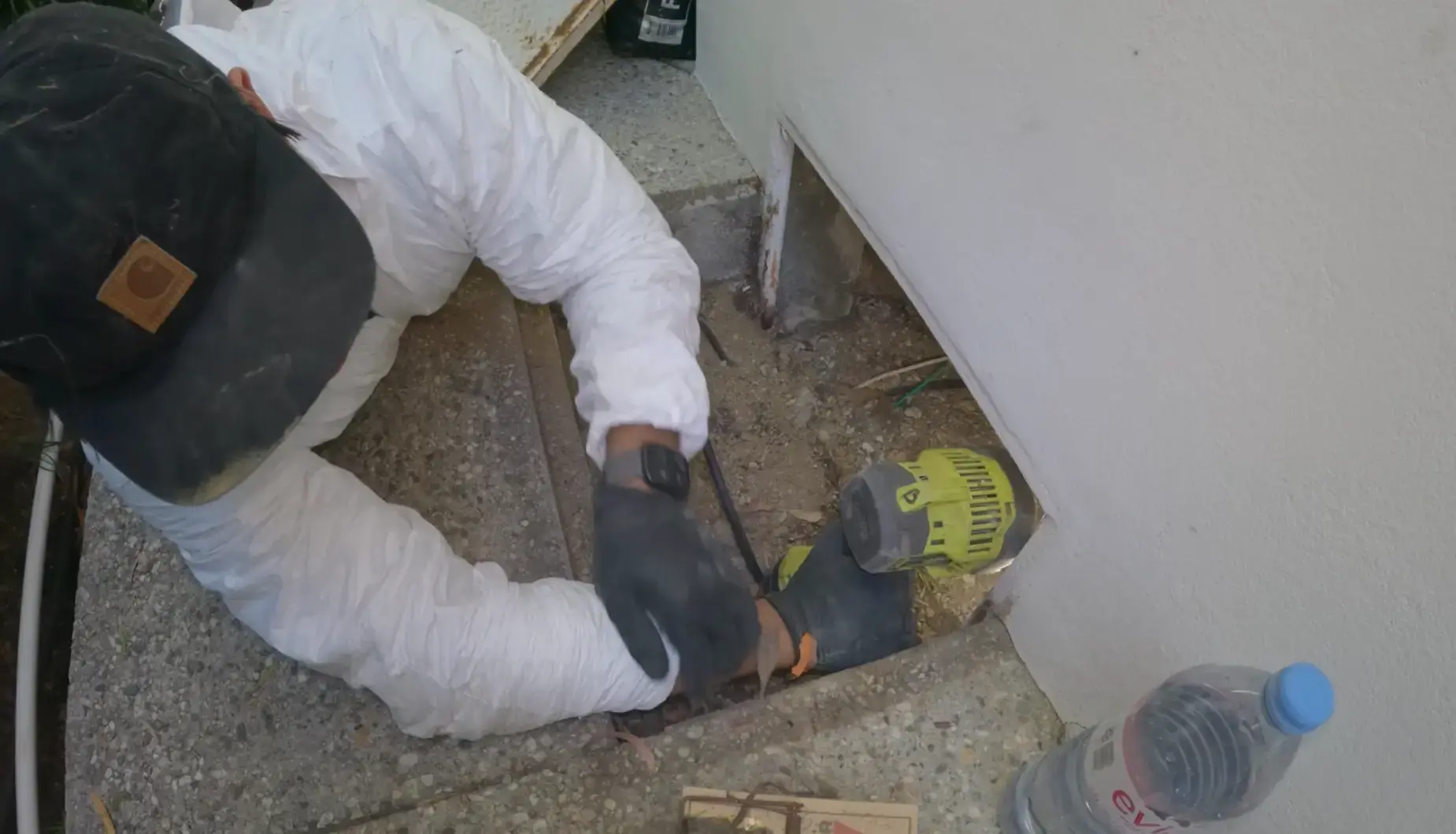
Most people look for where mice are. Look for where they come in. Do this walk-around with a flashlight.
Garage door
Close it and look for light under the seal. A quarter-inch gap is enough for a mouse.
Under sinks
Check where pipes and drain lines go through the wall. Gaps there are one of the most common entry points indoors.
Dryer and range vents
Look for loose covers and gaps around the duct.
Doors
If you can slide a pencil under an exterior door, a mouse can pass. A new door sweep fixes this.
Foundation and siding
Scan for gaps where utility lines enter the home.
Pantry and garage storage
Swap cardboard for lidded plastic bins, which mice cannot chew through.
Write down each gap and take a photo. If you want a pro to seal them, send us the list and we will quote the job.
Santa Barbara rodent control
Mice in a Santa Barbara rental or condo: who does what?
Mice often travel between units, so a fix in one unit may not be enough.
- Take photos of droppings and gnaw marks, and report the problem to your property manager in writing with the date.
- Ask for a building-wide inspection, not a single-unit trap job.
- California law treats rodents as a habitability issue (Civil Code 1941.1), but each case depends on your lease and the facts, so check with a local tenant resource for what your landlord must do.

Health and safety
House mice and your health: salmonella, LCMV and allergies
House mice can carry germs, and the one most tied to them is lymphocytic choriomeningitis virus (LCMV). UC IPM says house mice may also carry salmonella and leptospirosis. For most people the risk is small. It is a good reason to clean up the safe way.
How people get LCMV
People get LCMV by touching or breathing in dust from mouse urine, droppings, saliva or nesting material, or by a bite. Wet cleaning and gloves lower the risk.
How common
Mother To Baby estimates 5% to 10% of house mice in the U.S. carry LCMV. UC IPM puts it near 5%. You cannot tell which mice carry it, so care with droppings is wise.
Symptoms
many people have none. Some get fever, body aches, tiredness, nausea or vomiting 1 to 2 weeks after contact. Rarely, it affects the brain or spinal cord lining.
Pregnancy
LCMV can pass to an unborn baby. If you are pregnant and have had contact with mice or droppings, call your doctor, and have someone else handle the cleanup.
Allergies
Mouse urine is a strong allergen and is linked to asthma in sensitive kids. Removing the mice and cleaning up properly helps reduce symptoms.
Do not sweep or vacuum droppings
That stirs dust into the air. Wet them with disinfectant, wipe with paper towels, and wash your hands. If you have a fever or flu-like symptoms after cleaning, tell your doctor about the mouse contact. Learn more in our Rodent Health Risks guide. Mice can also spread salmonella through their droppings. The CDC says symptoms usually start 6 hours to 6 days after exposure and last 4 to 7 days. Call a doctor for a fever over 102°F, diarrhea lasting more than 2 days, bloody stool or signs of dehydration.
What we offer
What we offer for house mice
Every job starts with a free consultation call to plan the work. You get a written quote after we see your home, before any work starts.
Mouse trapping program
Traps, check visits and removal of dead mice.
Sealing and exclusion
Metal and concrete repairs at entry gaps.
Droppings and nest cleanup
Wet clean-up and sanitizing.
Dead rodent removal
For smells in walls or ceilings.
Monitoring visit
A re-check to confirm the mice are gone.
See all options on our Rodent Control Services page.

Where we work
Areas we cover
We help homes and businesses with house mice in Downtown Santa Barbara, the Mesa, the Riviera, Samarkand, Hope Ranch, Montecito, Summerland, Carpinteria, Goleta and Isla Vista.

What is the fastest way to get rid of mice in the kitchen?
Snap traps along the wall, set in pairs. Put them behind the stove, fridge and under sinks, with a pea-sized dab of bait. Put away open food. Most active mice are caught in a few nights. Then seal the gaps, or new mice will move in.
How do I get rid of mice in my house forever?
Seal every gap bigger than ¼ inch with metal or concrete. Trapping clears the mice you have. Sealing keeps new ones out. Store food in lidded containers, take trash out, and trim plants away from the walls.
What keeps mice away permanently?
Only a sealed home does. Smells like peppermint may not work for long, and mice get used to them. Metal and concrete patches, door sweeps and tidy storage are what last.
What kills mice instantly?
A properly set snap trap. It is quick, and you can see the result. Poison takes days and can harm pets and wildlife. We do not recommend it indoors.
Do mice come out during the day?
Sometimes. Mice are mostly active at night, but you may see one by day. A daytime sighting often means a busier nest, not a lone mouse.
How many mice are in my house if I see one?
Often more than one. A female may have 5 to 10 litters a year, so one sighting can mean a nest. Set several traps, not one.
What is the difference between a house mouse and a field mouse?
House mice are gray with a nearly hairless tail. Field mice, such as deer mice, have a white belly and a furry tail. Deer mice can carry hantavirus, so see our Deer Mice and Hantavirus page.
Can I get sick from house mice?
It is possible but not common. House mice can carry LCMV and salmonella. Avoid touching droppings, do not sweep them, and wash your hands. See your doctor if you have flu-like symptoms after contact.
Does the county help with mice?
The Mosquito and Vector Management District of Santa Barbara County shares information on mice and offers free rat and mouse property inspections. You can reach them at (805) 969-5050.
Think you have house mice?
A close-up of the clues usually settles it
Mice are small, so the clues are small. Good close-ups help us confirm.
- 1Droppings
Tiny and about the size of a grain of rice.
- 2Gnaw marks
Small tooth marks on boxes, soap or wire.
- 3Nests
Shredded paper or fabric in hidden corners.
- 4Entry gaps
Gaps around pipes and doors, about a quarter inch wide.
- 5Food storage
Pantry, pet food and garage storage.
Ready when you are
Ready for house mouse control in Santa Barbara?
Call us for a free consultation. We will find the entry gaps, trap the mice, and seal your home so they stay out.
- Call us(805) 429-3801
- Email[email protected]
- Office716 N Milpas St, Santa Barbara, CA 93103
- HoursMonday to Saturday, 8:00 AM to 6:00 PM